Blog

Flies

IMG_4675small

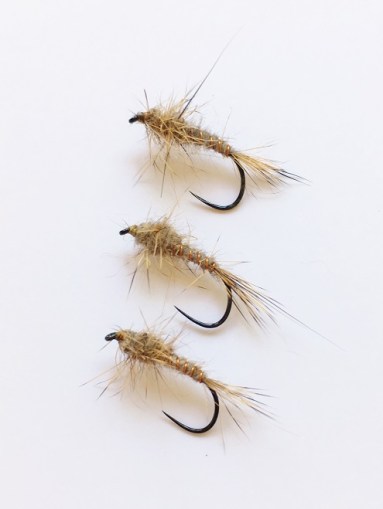
Gold Ribbed Hare’s Ear Nymph

This fly has a long history. In 1886 Frederic M. Halford published ‘Floating Flies and How to Dress Them’. He included the Gold Ribbed Hare’s Ear, a dry fly. In 1910 G. E. M. Skues listed the Hare’s Ear pattern as a wet fly in his classic ‘Minor Tactics of the Chalk Stream‘. The history of this pattern therefore neatly tracks the Skues – Halford debate.

According to the catch returns this traditional pattern accounted for a high proportion of the trout caught on the club’s lakes and the river for the last three seasons. It is a good general representation of a variety of nymphs. A size 10 is a good imitation of a mayfly nymph and a size 14 can represent an olive or stonefly. It is a fly that will catch trout throughout the season.

DSC_0262small

Adams

This is a traditional fly that was invented in 1922 in the USA by Leonard Halladay for his friend Charles F Adams.  The pattern has since been modified to the extent that any small, grey dry fly is referred to as an ‘Adams’. It can also be tied with slips of feather for the wings or as a parachute fly.

This pattern is a good general representation of adult midges and can be very effective in the evening when other flies have been rejected by the trout. Midges hatch throughout the year and a size 14 Adams is a consistent fly from March to November.

These traditional patterns should be in every member’s fly box.

Catch and Release


IMG_6782dsmall

This season the option to catch and release stocked trout will be permitted on both lakes at Little Bognor. During the trial barbless hooks must be used. The trial gives members the option to take or release stocked fish. Any wild trout, which usually weigh less than 1lb, should continue to be returned to the lakes. The lakes at Little Bognor are spring fed and the lower summer water temperatures allow the trout to be released with a good chance of survival.

IMG_3357small

Catch and release enables members to return fish that are not wanted for the table. The advantages are that members may catch more fish and some returned trout might over-winter. However, there are disadvantages. With repeated catches the trout become educated and more difficult to catch. It should be an interesting season at Little Bognor.

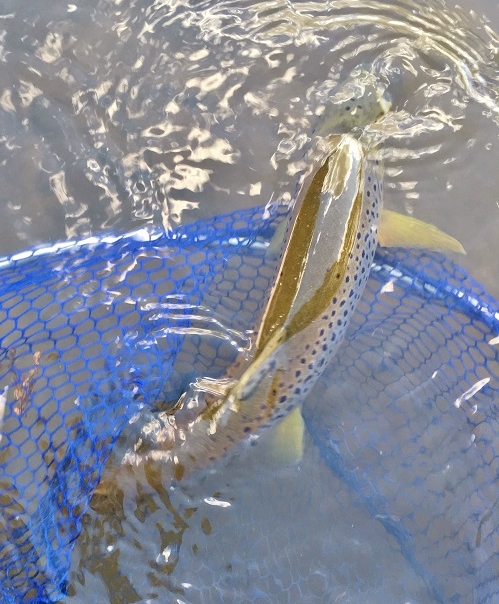
Studies on rod caught salmonids, using radio tracking devices, show that 100% survival is possible with very careful handling. However, there is 100% mortality of deeply hooked or bleeding fish. If a trout is deeply hooked or bleeding badly from the gills or throat, please do not return it. If possible unhook trout while they are in the landing net and allow them to recover in the net before they are released. It might take 5-10 minutes before a fish has recovered sufficiently for it to swim away. If a fish cannot hold itself upright in the landing net, it will sink to the bottom of the lake and die.

The trial will be monitored during the season and if there are fish fatalities or the water temperature is too high, the trial may be stopped. Returned fish will not be added to your fish account. Catch and release is not permitted on the other lakes.

IMG_3432

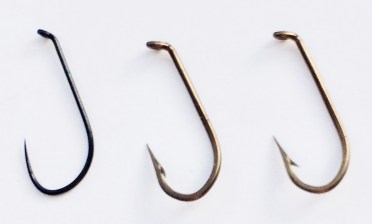
Barbless hooks are mandatory on the River Rother so that the wild trout and sea trout can be returned to survive and spawn. Barbless hooks or squashed barbs, ensure that trout are not damaged in the landing net or while being unhooked and that the fish can be quickly returned to the water. Barbless hooks, for nymphs and dry flies, are generally finer in the wire because a barb does not have to be cut into the metal. They are also sharper. As a result they tend to penetrate and hold a trout better than a barbed hook.

hooks

A barbless hook tends to drop out of the trout as soon as the fish is in the landing net. The hook does not become snagged in the mesh as the fish struggles and often the net can be lowered and the fish allowed to swim away without it being handled. That greatly increases its chances of survival. A pan-shaped, knotless landing net with a fine mesh gives the fish room to recover and swim away without any damage to it’s fins.

Use pliers or forceps to squash the barb down after tying the fly to the tippet. Barbless hooks and flies can be bought online, most specialist fly fishing suppliers stock a good selection.

Wildlife

IMG_5814small

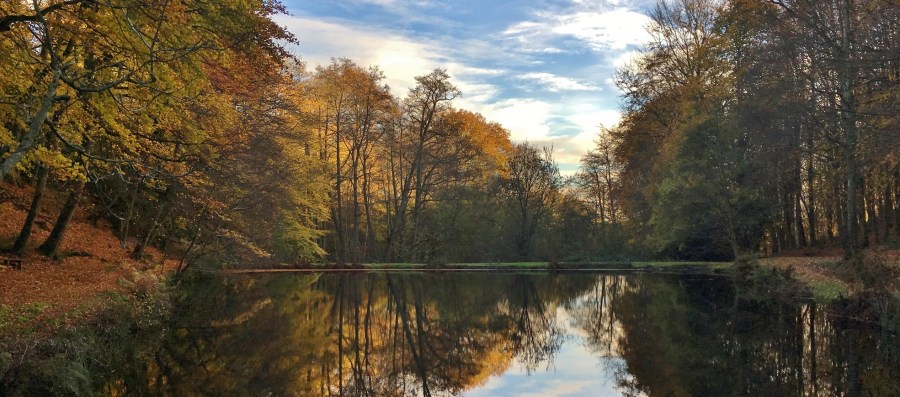
Fishing is not just about catching fish. It is also about the beauty of the countryside and the wildlife. A relaxing day sitting beside the water, watching the clouds and listening to the birds might be interrupted by a trout or two but that’s not essential.

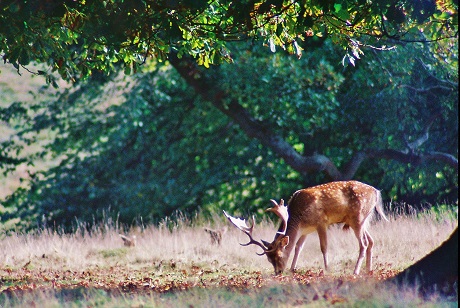
Sitting quietly under a tree, an angler goes unnoticed by the animals and birds. The Bible and Isaak Walton in the Complete Angler, proclaimed ‘Study to be quiet’. Advice repeated by BB in the title of his book ‘Be Quiet and Go a Angling’. Deer, foxes and even a badger might approach while an angler waits quietly for dusk and the evening rise.
CNV00011small

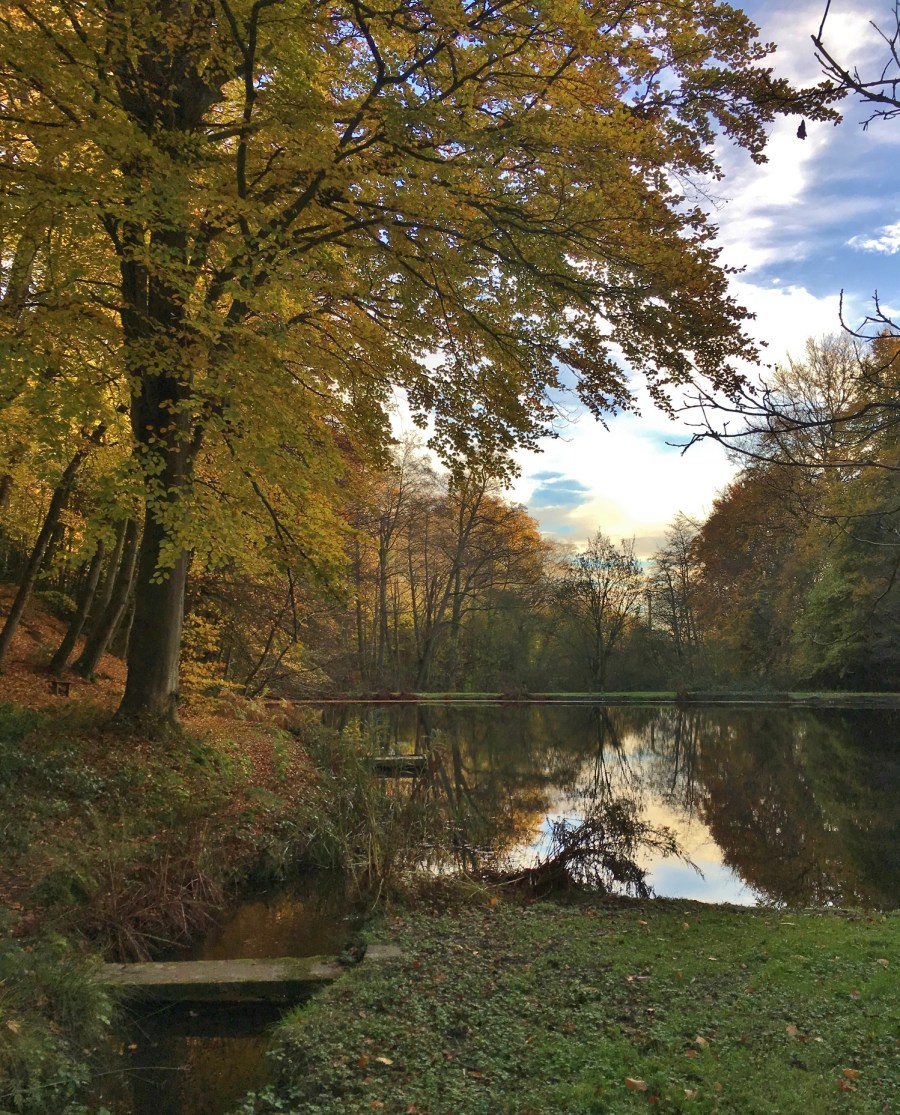
Club members are fortunate in having access to unspoilt countryside that is protected and managed for the benefit of the wildlife. The Rother valley is a Site of Nature Conservation Importance and the river flows mainly through the South Downs National Park which is an Area of Outstanding Natural Beauty. The club’s lakes are within parts of the Leconfield Estate to which the public has no access and the fauna is therefore undisturbed. The Estate is a haven of peace and tranquility.

IMG_4184small

Walking and frequent casting puts the trout down and also scares the wildlife. Waiting quietly and watching the water usually reveals a rising trout. If not, the buzzards circling just under the cloud base or the bright, blue blur of a kingfisher whizzing past are just as rewarding.

The water meadows in the river valley are grazed by mahogany red Sussex Cattle. They have been bred at Petworth since 1782 and were originally used for hauling carts and logs. They thrive on marshland and their grazing provides a habitat for ground nesting birds and wild flowers.
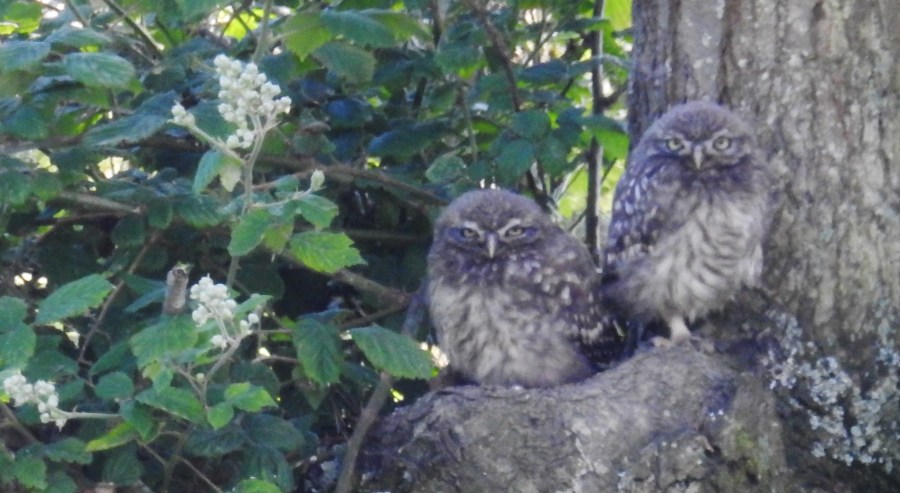
Owl boxes have been positioned around the Estate and they are all occupied. The water meadows are good hunting grounds and during the evening, owls are often seen by anglers on the river.

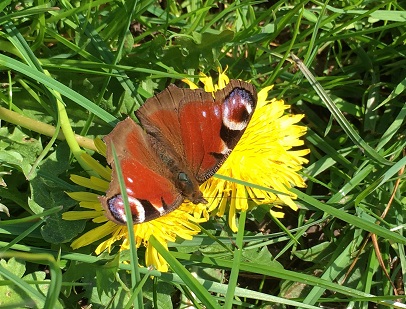
The hottest part of the day is a good time to sit in the shade of an alder or willow tree and have lunch. At that time the trout are usually hiding in the tree roots or under the streamer weed and are hard to tempt. Although the fishing is slow, there is much to see. Swallows skim the water looking for mayfly and olives. Chaffinches sit in the bushes and wait for their lunch to flutter past. Traditional farming practices have enabled terrestrial insects to flourish and there is a wide variety of butterflies amongst the long grasses.
IMG_3033small

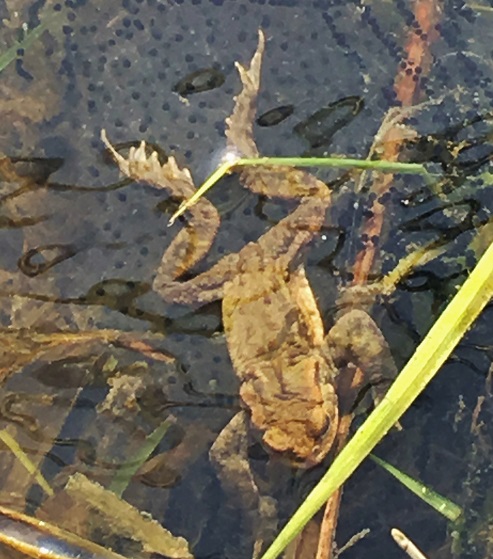
The path from the clubhouse at Great Springs, past Little Springs and through the woods to Lower Figgs is like a nature trail. A buzzard sits in the tops of the trees beside Little Springs and pheasants scurry away into the bushes. A heron leaps into the air from the rushes where it has been feasting on frogs and toads. Yellow wagtails sit in the sun on the dam wall at Luffs and a kestrel hovers over the nearby moorland.
IMG_2698small

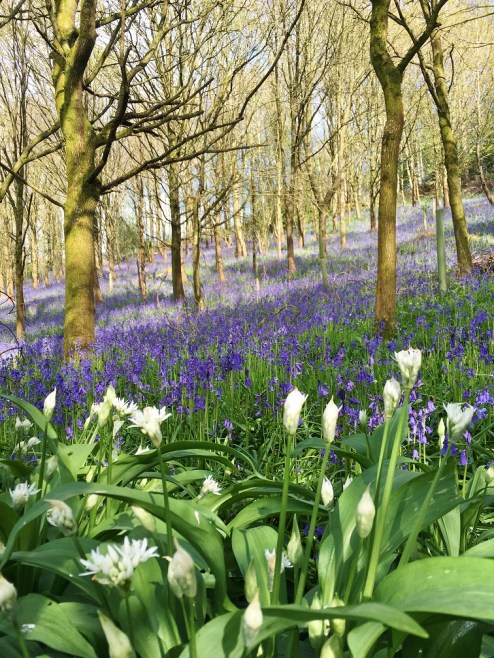
In the spring the woods along the sides of the river valley and around the lakes, are carpeted with bluebells, violets and wild garlic. The pungent smell of the wild garlic eventually overpowers the fragrant bluebells. In the water meadows there is a wide variety of wild flowers, particularly orchids.
IMG_0352small

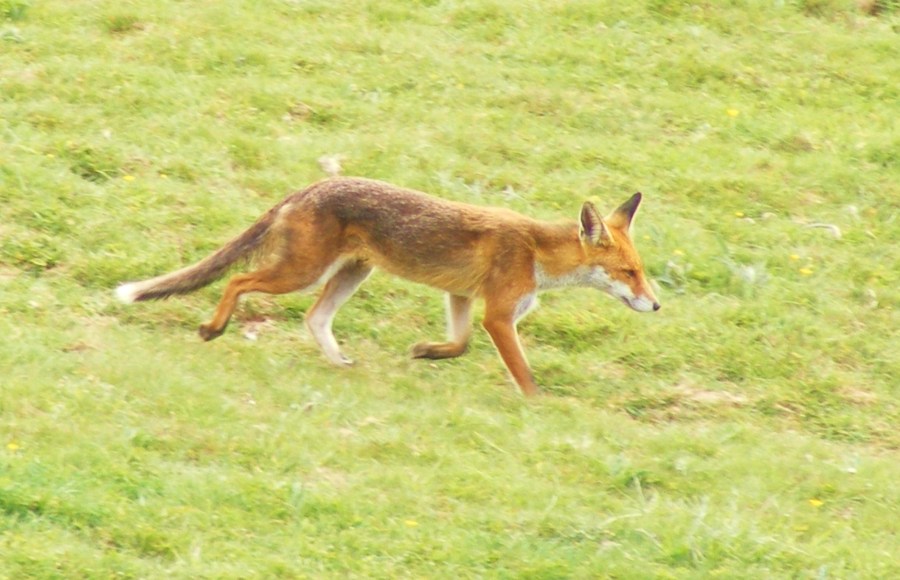
In July the days are long and hot and the trout become lethargic. They stay in the deepest part of the lakes and shelter under the bushes that have been allowed to remain by the river. Early morning and late evening are the most productive fishing times but there is plenty to see at midday. A honeybee collecting nectar from the Himalayan Balsam. A fox startled from it’s siesta at Ladymead. Perhaps a sighting of a hobby as it catches dragon flies in the sunshine.
DSCF0362a

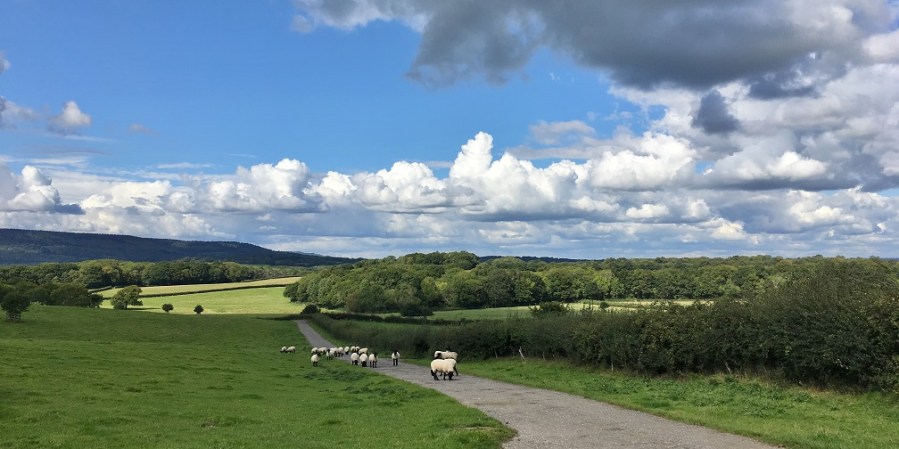
The South Downs cause the prevailing south westerly winds to rise and clouds to form over the Rother valley. Anglers may have waited several hours for the evening rise but if the trout are fussy and things don’t go to plan, there’s always the consolation of a spectacular cloudburst sunset.

The wonder of the world
The beauty and the power
The shapes of things,
Their colours, light and shades
These I saw,
Look ye also while life lasts

. . .  Denys Watkins-Pitchford ‘BB’

Rother Sea Trout

Sea trout and brown trout are the same species, Salmo trutta.

Rother sea trout and those in the River Ouse, have a very distinctive appearance. They are generally deep bodied, heavily spotted fish. They show exceptionally fast growth. The Sussex rivers produce, on average, the largest sea trout in England and Wales. Most sea trout are female. These large old sea trout produce thousands of eggs and are the most important fish to return.

IMG_3433

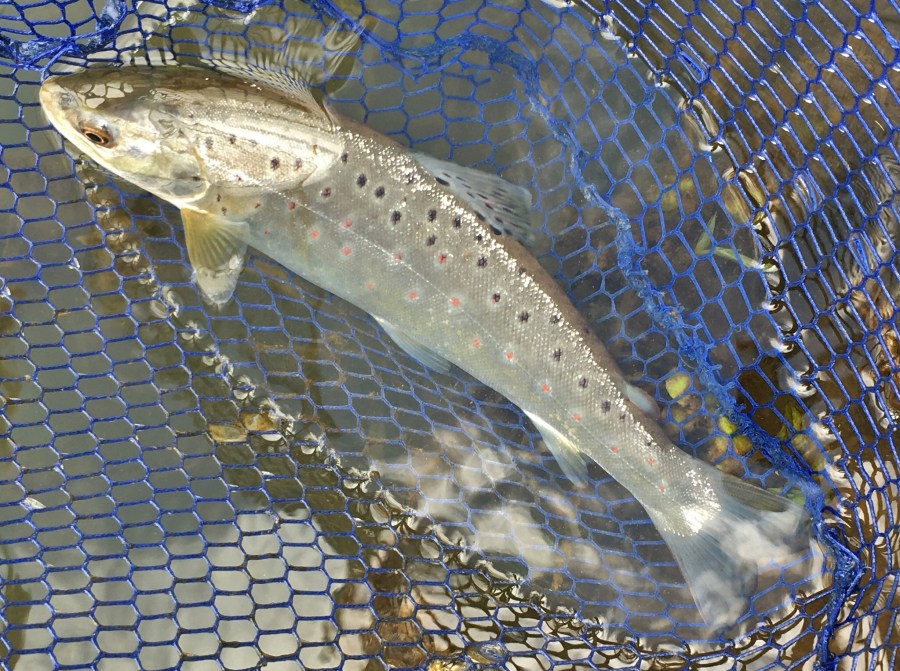
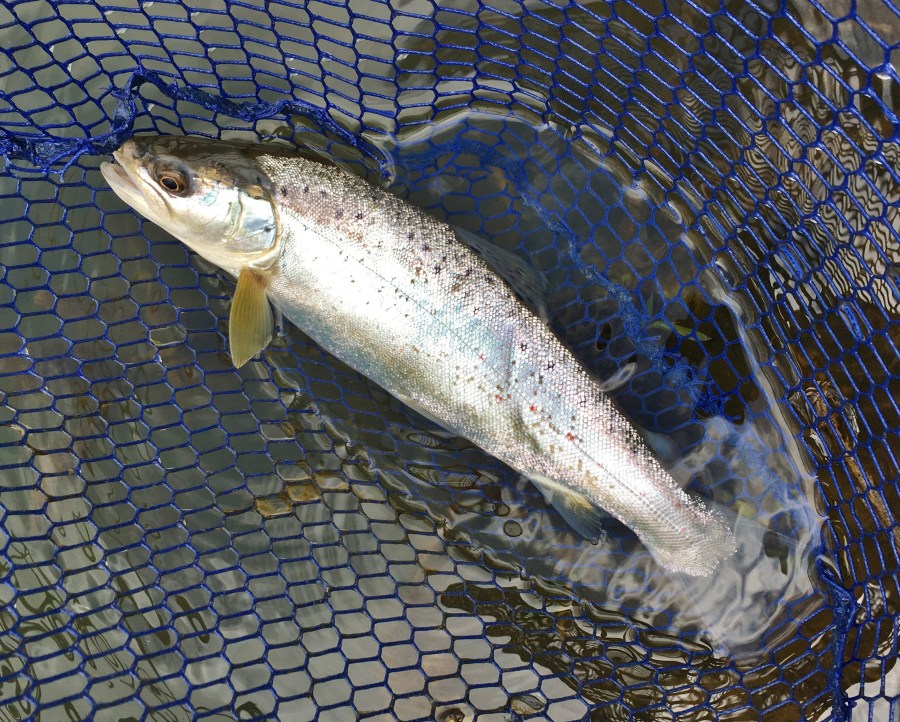
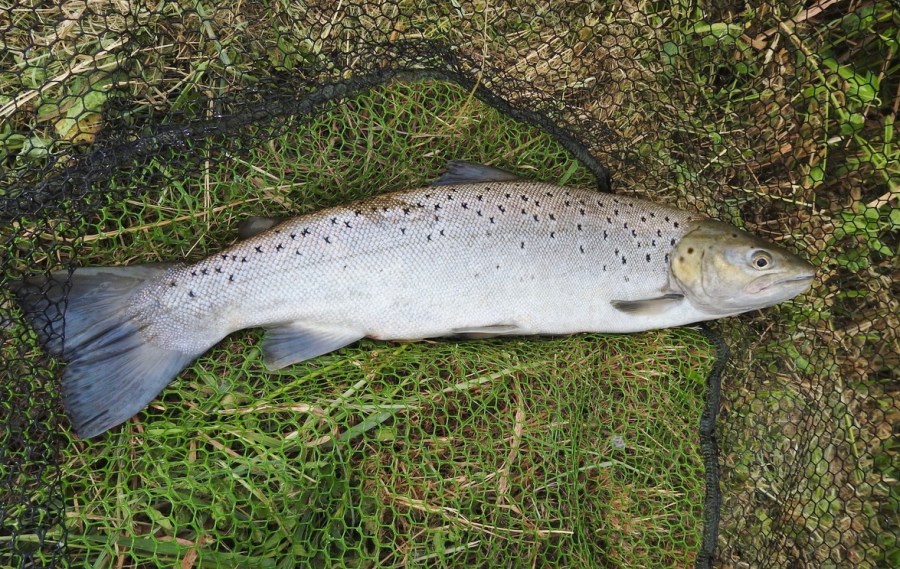
A sea trout smolt caught in May

A proportion of young trout are driven to migrate to the sea by a lack of food in the river. The young trout turn silver and change their physiology so that they can survive in salt water. These smolts shoal together and migrate to sea from March to May usually at night. The sea is rich in food and the trout rapidly increase in size. During the day migrating smolts may splash about on the surface, they can look like a shoal of dace or roach.

seatrout02b

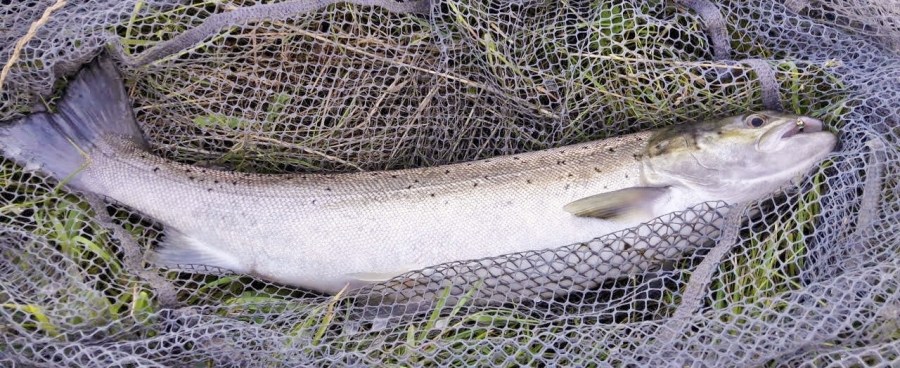
A mature sea trout

Mature fish arrive in the summer and early autumn. They usually travel at night when the water level is high. During the day they wait in deep pools with good tree cover. The majority of sea trout entering the Rother are large fish which have spent a year or more at sea. They are usually in the 4-6lb class and are bright silver with black spots. After a few weeks in the river the silver fades to a pewter or lead colour with a purple sheen.

Mature sea trout remain in the estuary waiting for rain. High water levels provide better travelling conditions for the fish and encourage them to swim upstream. Adult sea trout are powerful jumpers and can clear a yard high weir. On the River Arun and the River Rother, barriers to their migration have been modified or removed by the Environment Agency working in partnership with the Arun and Rother Rivers Trust.

Sea trout breed when water temperatures are low during October and November but late arriving fish may spawn until mid-February. They spawn in the main river on gravel riffles and also in side streams. The side streams are very small and many can only be reached when water levels are high.

IMG_3434small

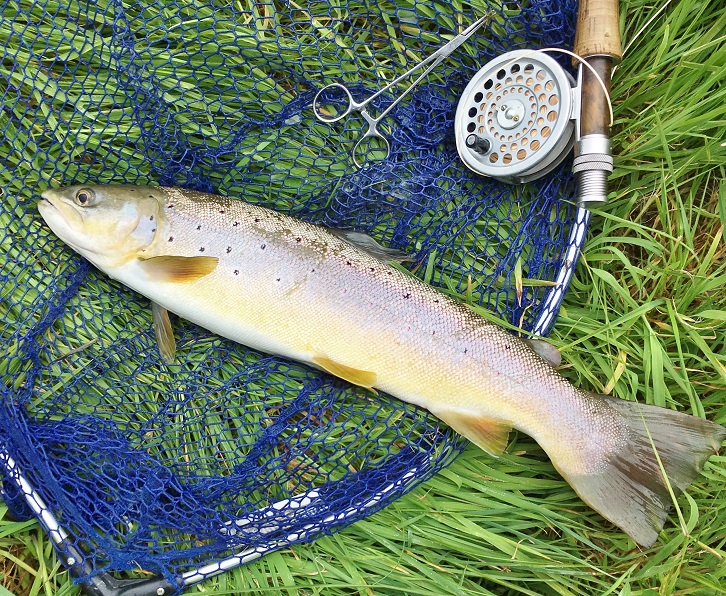
A sea trout kelt from one of the new riffles

Once spawning is completed the fish quickly return to the sea. Sea trout are stressed during spawning and might show white or reddish fungal growths. If the infection is not too serious, the fish will return to sea and recover. Therefore sea trout kelts that have minor fungal infections should not be killed.

The club is fortunate to have a good number of wild brown trout and sea trout in the River Rother and is working hard to restore their environment. Members targeting sea trout must have a salmon and sea trout licence.

The club rules have been changed this season to permit only the use of barbless hooks on the river. All sea trout and wild trout must be returned.

Restoring the Rother

arrt_header

The Arun and Rother Rivers Trust (ARRT) is a registered charity formed in 2011 and is part of a national network of River Trusts. The main objectives of ARRT are to protect the rivers, improve biodiversity and to work closely with the Environment Agency (EA), farmers, fishing clubs and other organisations. Andrew Thompson, the club’s Keeper,  is a Trustee.

The Arun and Rother catchment area covers 575 square miles and is dominated by the chalk ridge of the South Downs, greensand and the clay of the Weald. The Rother valley is a Site of Nature Conservation Interest (SNCI) and since 2010, has been a part of the South Downs National Park. The Rother is not the original name of the river. The old name was ‘Scire’, a Saxon word meaning ‘bright and clear’.

The club’s stretch of the river was part of the Rother Navigation. Artifical cuts and locks were built between 1791 and 1795 turning the river into a canal for the import of coal and the export of corn and timber. The Leconfield Estate is working with ARRT, the EA, the Wild Trout Trust (WTT) and other organisations to return the river to it’s natural state.

RiverfliesFBAlogo

Regular surveys of freshwater invertebrates are carried out as part of the Rother Riverfly Scheme. The survey work involves volunteers collecting samples of invertebrates from the riverbed and recording the abundance of eight riverfly groups. The data is used to monitor water quality.

RiverfliesFBAlogo

The Wild Trout Trust is a charity that stimulates conservation projects to improve river habitat. The South Coast Sea Trout Project (SCSTP) is a partnership between the EA, the WTT, the Atlantic Salmon Trust and the ARRT. The project focuses on the freshwater element of the sea trout lifecycle The objectives are to improve the spawning and juvenile habitat and to improve fish migration through the installation of low cost fish easements.

seatrout04

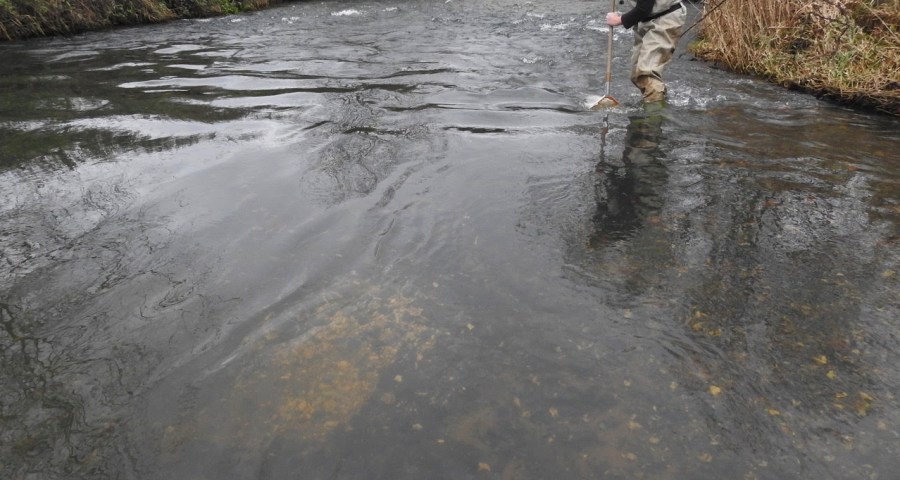
On the Rother new gravel riffles have been constructed to improve the habitat for invertebrates, to provide spawning sites for the fish, to speed the flow of water thus removing silt and increasing the amount of dissolved  oxygen. The restoration of the river also includes restricting the width of the river, leaving tree cover for shelter and shade.  All wild trout and sea trout caught by members are carefully returned to the river

redd03

A redd above one of the new riffles

After several years the results of these projects are apparent. The riffles hold good numbers of invertebrates and the population of wild trout is increasing. During May there were lots of sea trout smolts migrating downstream. Several mature fish in the 4-5lb class were caught later in the season. In order to protect the wild brown trout and sea trout, only barbless hooks may be used.


2018 Membership

Membership renewal letters have been posted and enclose the renewal form, details of the 2018 charges and a standing order form. The membership fee remains the same but the fish stocking fee and guest ticket have both been increased slightly to ensure that the club covers it’s costs.

IMG_6950small

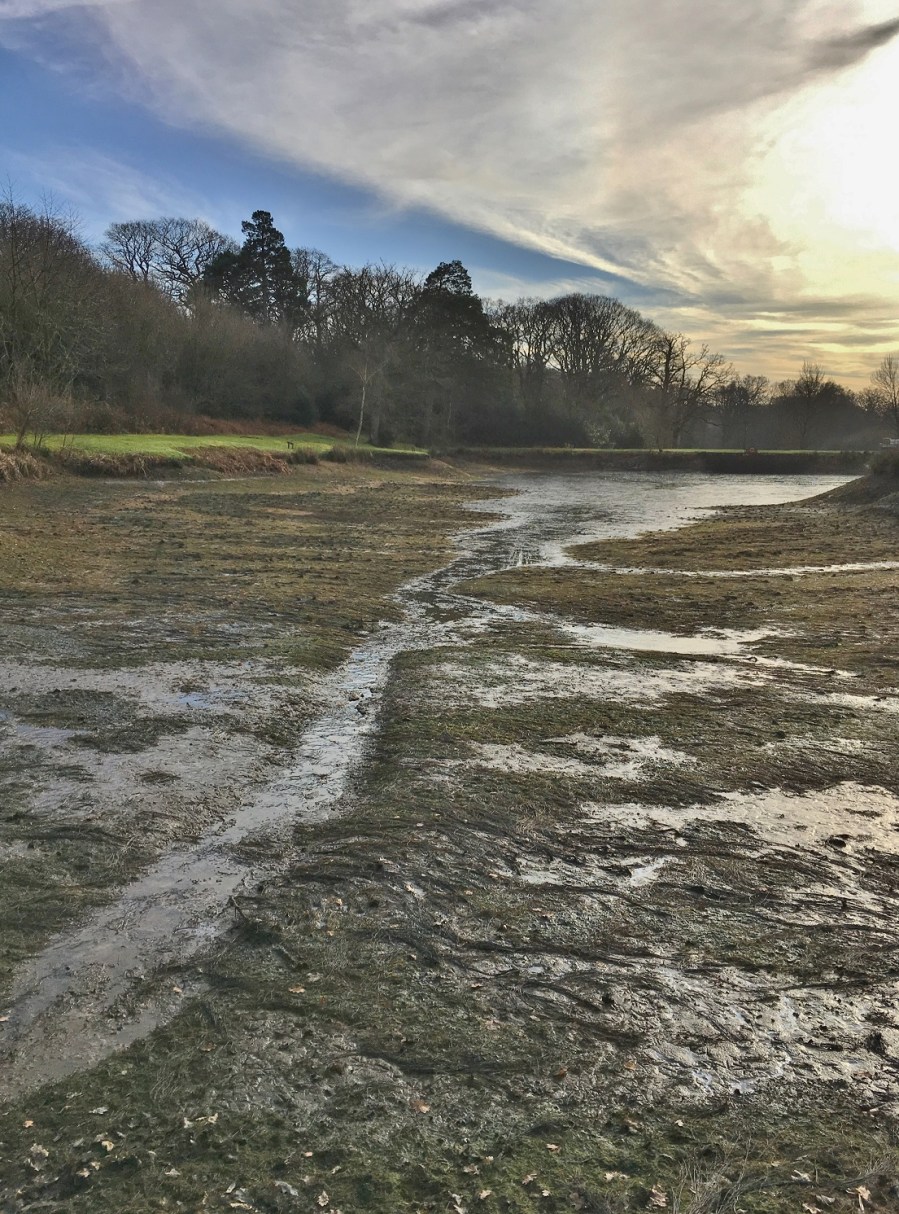
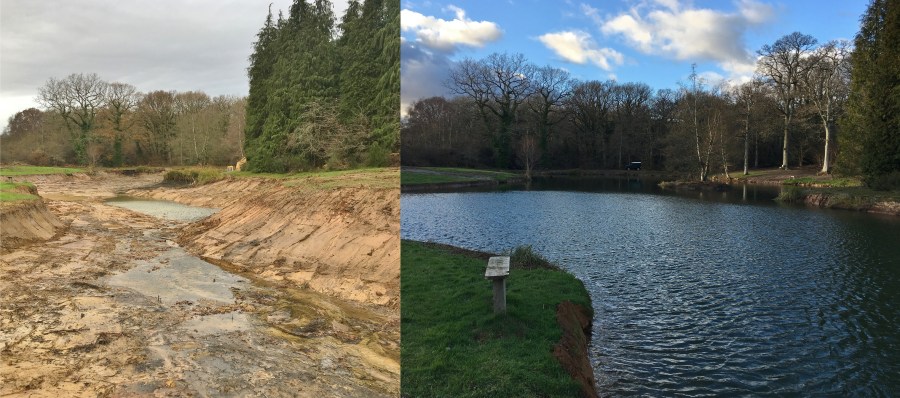
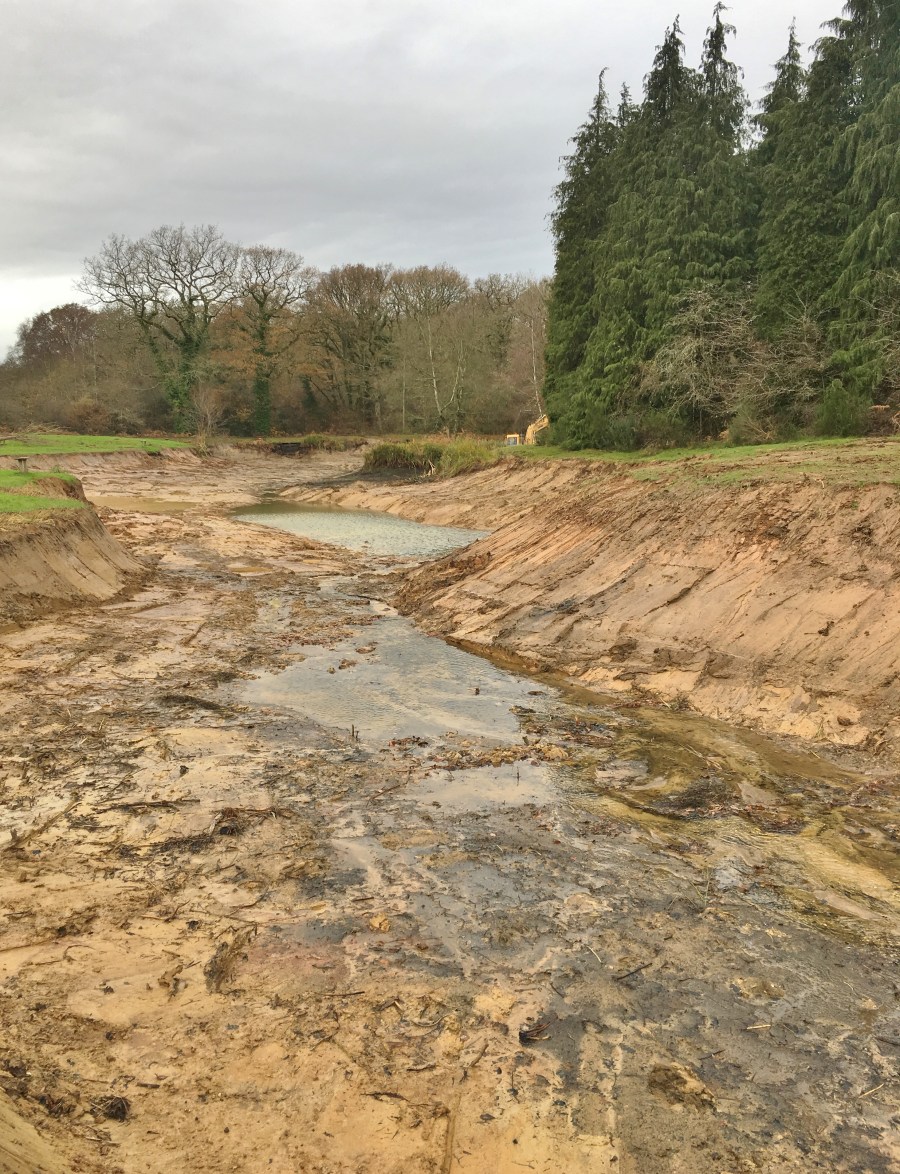
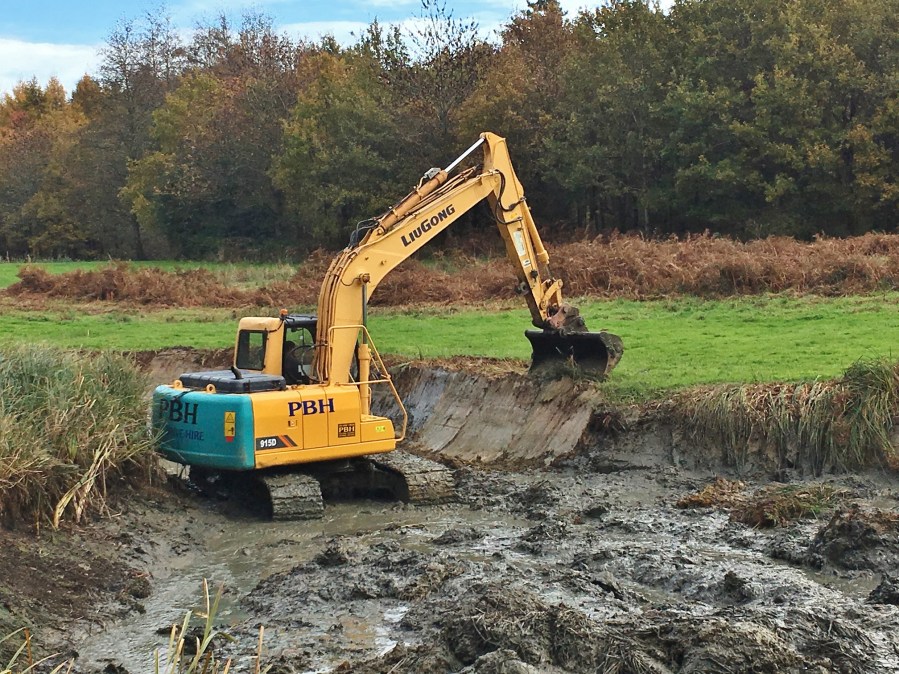
The restoration of Lower Figgs is complete and the recent rain has filled the lake. Work to remove the weed and silt from Great Springs is underway and the lake has been drained. The objective is to stabilize the water temperature and pH during the hot summer months and to give members better access to weed free water.

The lakes at Little Bognor will trial catch and release. Both lakes are spring fed and the summer water temperatures are generally low enough to ensure the recovery of released trout. Barbless hooks or crushed barbs must be used on both lakes.

In view of the number of stocked trout that are returned to the river and the increasing number of sea trout and wild trout caught, barbless hooks must also be used on the river.

Diary dates:

AGM – Friday 16 March, evening

Spring Barbeque – Sunday 13 May

River Day – Sunday 24 June

Further details of these events will follow.

8 December


DSCN3274

The Last Fish of the Season

Lakes – The season ended on Thursday 30 November. During the last few days of the season members visited the lakes on 19 occasions and caught 9 trout including 7 over 2lbs and 1 wild fish. Both lakes at Little Bognor fished well and produced 6 of the fish.

IMG_6817small

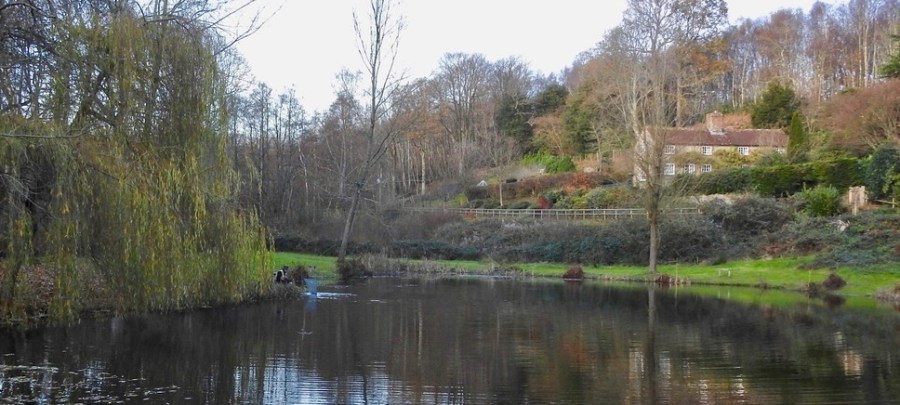
The restoration work at Lower Figgs is nearly complete and the lake is full again. The area surrounding the lake has been landscaped and will be seeded in the Spring. The lake looks magnificent and will be in excellent condition when the new season opens in March.

The Estate Maintenance Team have done an excellent job in a very short time. Lower Figgs should become a favourite with members next season.

The water level at Great Springs has been lowered. The fish will be removed next week,  the weed and silt will be scraped out and the lake left to refill. There will be regular updates to keep members informed of progress.

27 November

IMG_6817

Lakes – Members visited the lakes on 11 occasions and caught 5 trout, one of which was over 2lb. Although the season is nearly at an end there are trout to be caught at Little Springs and Little Bognor.

Good progress has been made  with the restoration work at Lower Figgs. The banks have been steeply graded to minimise marginal weed growth and the bottom of the lake has been contoured to provide deeper and cooler water for the trout during the summer.


20 November

IMG_6777

Lakes – The weather last week was changeable but it didn’t prevent members from visiting the lakes. During 19 visits 12 trout were caught, mainly from the top lake at Little Bognor. Half of the total number of fish caught were over 2lbs and 2 wild fish were returned at Little Bognor.

Work to restore Lower Figgs continued. When the work is complete the Estate Maintenance team will turn their attention to Great Springs.

13 November

Lakes – The rain and cold north wind kept members away from the lakes last week but those who ventured out were rewarded with good fishing. Members visited the lakes on 12 occasions and caught 8 fish. A 3lb rainbow was caught from Great Springs and a brown of 3lb 8ozs was the best of three browns from Little Bognor.

IMG_6749small

Work to restore Lower Figgs began today. The banks will have a steeper profile to reduce marginal weed growth and the silt is being removed. The Estate Maintenance team are doing an excellent job and are making good progress.