23 April

IMG_8114asmall

The weather throughout the week was glorious. Temperatures reached the mid-seventies but the water in the lakes retained its chill and the trout were very active.

Lakes – Members visited the lakes on 83 occasions and caught a total of 64 trout. Little Springs received the most visits and of the 13 fish that were caught there, 10 were over 2lb. Little Bognor remained popular, a total of 27 fish were caught from the two lakes and of those, 25 were returned. The trout at Little Bognor are becoming quite fussy, they are feeding throughout the day but a stealthy approach and small flies are required. The most productive flies were buzzers and small dry flies such as Adams. Fish were rising well on Lower Figgs, taking buzzers and Alder flies.

IMG_8282

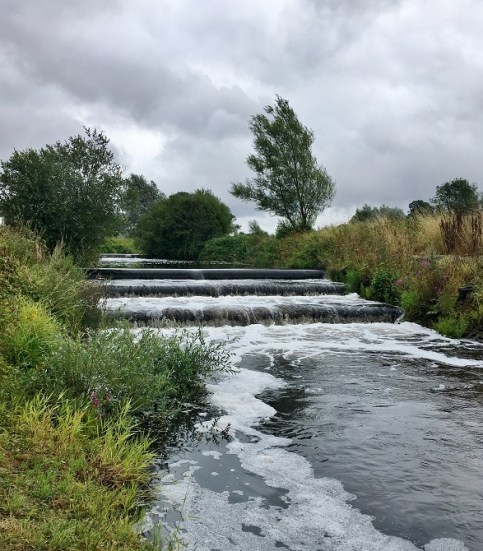
River – The river level dropped mid-week and the water lost some of its colour. Members visited the river on 21 occasions and caught 2 trout, both over-wintered stock fish. Both fish were caught at Rotherbridge. The recent thunder storms caused a small increase in the water level but this week it will drop and give members a good chance of a fish or two. Fishing the margins with a weighted nymph is likely to be the best approach.


16 April

stocking003

The first part of the week was more like Autumn than Spring. Although the river rose it dropped again at the end of the week but remained quite coloured. The lakes were also much clearer at the end of the week and the Spring sunshine encouraged the fish to rise.

Lakes – Great Springs received its first stock of fish since the lakes restoration. The stocking included several trout over 5lb. Members visited the lakes on 55 occasions and caught a total of 64 trout which included 19 fish over 2lb. A trout of 5lb 4ozs was caught from Little Springs and a 4lb 8ozs fish was landed at Great Springs. Of the 39 fish that were caught at Little Bognor 33 were returned. The catch and release trial remains very popular, more than half of members visits were to Little Bognor.

IMG_8119small

River – The river remained high and coloured until the weekend when the level fell slightly. Two members made several visits to the river but no fish were caught. No rain is forecast for the next week and the river should return to its normal Spring level.

A new gas barbeque has been provided at Great Springs.


9 April

IMG_7937small

Spring finally arrived, the lakes looked beautiful in the bright sunshine. Mid-week saw the river level finally dropping after a long wet winter. However, the end of the week saw more rain and a rising river.

Lakes – Members visited the lakes on 49 occasions and caught a total of 77 fish including 15 over 2lb. Little Springs produced the most fish and 8 of the fish caught there were over 2lb. The Little Springs trout were caught on a wide variety of flies including Blue Flash Damsel, Montana and Pheasant Tail.

Of the 39 fish caught at Little Bognor, 32 were returned. Small dry flies and buzzers accounted for a lot of the fish. After only a month of the season, the total number of fish caught at Little Bognor has exceeded the original stocking.

IMG_8013small

River – The water level dropped slightly during the middle of the week and the river was losing its colour. The high, coloured water kept most members away. Only one member visited the river during opening week and no fish were caught. Hopefully, next week the water level will drop and the colour will disappear. The wild and over-wintered trout should be hungry.

IMG_7964small

Please contact Holly at the Estate Office to book tickets for the Spring barbeque which is on Sunday 20 May.


2 April

IMG_3096small

The wet, cold weather during the latter part of the week kept members away from the lakes. Members visited the lakes on 35 occasions and caught a total of 61 fish, 6 of which were over 2lb. Most of the fish were caught at Little Bognor, where catch and release continues to be popular. Of the fish caught at Little Bognor 46 were returned to the lakes. A blue trout was caught from Upper Figgs. Most of the fish were caught on black flies. At Little Bognor the trout were feeding on tiny midges and most were caught on a dry fly or buzzer.

IMG_7877small

The River Rother opens for fishing tomorrow, Tuesday 3 April, but the water level is very high and the river won’t be fishable for quite a while.

When driving through Kilsham Farm to access the river, please keep your speed low and watch out for the children and animals.

The date of the Spring ‘Bring a Guest Day’ and barbeque has been changed to Sunday 20 May. Please contact Holly at the Estate Office to make a booking.

26 March

IMG_7659small

The weather over the opening weekend discouraged many members from venturing out, only a few hardy souls visited Little Springs and Little Bognor. Trout were occasionally showing at Little Springs but it was difficult fishing in the cold north wind. Great Springs is nearly full but the water is coloured and stocking has been delayed a few weeks to allow the water to clear.

IMG_7735small

Despite the cold weather the fish at Little Bognor were rising all over the lower lake, feeding on tiny grey flies. A few fish were also moving on the top lake. A total of 21 fish were caught and released over the opening weekend, the majority coming from the lower lake. As the weather improved more members visited Little Bognor. Productive fly patterns were Montana and various buzzers. The fish were taking just under the surface.

littlebognorc

During the first nine days of the season members visited the lakes on 50 occasions and caught a total of 127 trout. Five trout over 2lb were caught at Little Springs and of those, 2 were over 4lb. They were both overwintered fish as none have been stocked this year of that size. The biggest trout weighed 4lb 14ozs.

Catch and release at Little Bognor got off to a good start. Of the 99 trout that were caught from the two lakes, 88 were returned.

The river season starts on Tuesday 3rd April. The river level is currently high but it is falling and the water is clearing. The River Level icon on this page shows the water level twice a day and is particularly useful at this time of year.

AGM and Opening Day

The clubs AGM was held at Lodsworth Village Hall and was well attended. After business had been completed, Andrew Thompson gave a talk about the natural history of the Rother valley illustrated by photographs from his book – ‘River‘. James Simpson read one of his poems about a Barn Owl and also read a selection of poems and prose from Andrews book. After the talk members chatted about the new season over canapes and wine.

first fish

Opening day was cold and windy with heavy snow showers but a few members braved the bad weather and caught several trout. Fish were showing on the surface at Little Springs and both lakes at Little Bognor.

icerings

The first trout to be caught at Little Bognor this season was released. Please make a note on the catch return form of fish that are released so that the catch-and-release trial can be monitored.

Most of the lakes have been stocked. The stocking of Great Springs has been delayed as the water is still quite coloured. The landscaping around Lower Figgs and Great Springs will be seeded with grass as soon as the weather is warm enough.


2018 Season

stocking03

Membership permits,  car stickers and the clubs newsletter have been posted and should have been received by members. New members who wish to have a guided tour of the river and lakes should contact the Estate Office or Andrew Thompson.

The clubs AGM is at 6:30pm on Friday 16 March at Lodsworth Village Hall, the evening before the lakes open for the new season. Most of the lakes have already been stocked. A lot of over-wintered trout were seen rising at Little Bognor last week.

Rod licences are valid for 12 months from the date of purchase. The expiry date is printed on the reverse of the licence. Members fishing for sea trout should buy a salmon and sea trout licence.

Each week during the season a summary of the catch returns will be published here together with information about notable fish and fly hatches. The ‘River Level’ icon gives details of the water level for the Rother at Iping Mill and is particularly helpful when planning a trip to the river.

Tight Lines.

Flies

IMG_4675small

Gold Ribbed Hare’s Ear Nymph

This fly has a long history. In 1886 Frederic M. Halford published ‘Floating Flies and How to Dress Them’. He included the Gold Ribbed Hare’s Ear, a dry fly. In 1910 G. E. M. Skues listed the Hare’s Ear pattern as a wet fly in his classic ‘Minor Tactics of the Chalk Stream‘. The history of this pattern therefore neatly tracks the Skues – Halford debate.

According to the catch returns this traditional pattern accounted for a high proportion of the trout caught on the club’s lakes and the river for the last three seasons. It is a good general representation of a variety of nymphs. A size 10 is a good imitation of a mayfly nymph and a size 14 can represent an olive or stonefly. It is a fly that will catch trout throughout the season.

DSC_0262small

Adams

This is a traditional fly that was invented in 1922 in the USA by Leonard Halladay for his friend Charles F Adams.  The pattern has since been modified to the extent that any small, grey dry fly is referred to as an ‘Adams’. It can also be tied with slips of feather for the wings or as a parachute fly.

This pattern is a good general representation of adult midges and can be very effective in the evening when other flies have been rejected by the trout. Midges hatch throughout the year and a size 14 Adams is a consistent fly from March to November.

These traditional patterns should be in every member’s fly box.

Catch and Release


IMG_6782dsmall

This season the option to catch and release stocked trout will be permitted on both lakes at Little Bognor. During the trial barbless hooks must be used. The trial gives members the option to take or release stocked fish. Any wild trout, which usually weigh less than 1lb, should continue to be returned to the lakes. The lakes at Little Bognor are spring fed and the lower summer water temperatures allow the trout to be released with a good chance of survival.

IMG_3357small

Catch and release enables members to return fish that are not wanted for the table. The advantages are that members may catch more fish and some returned trout might over-winter. However, there are disadvantages. With repeated catches the trout become educated and more difficult to catch. It should be an interesting season at Little Bognor.

Studies on rod caught salmonids, using radio tracking devices, show that 100% survival is possible with very careful handling. However, there is 100% mortality of deeply hooked or bleeding fish. If a trout is deeply hooked or bleeding badly from the gills or throat, please do not return it. If possible unhook trout while they are in the landing net and allow them to recover in the net before they are released. It might take 5-10 minutes before a fish has recovered sufficiently for it to swim away. If a fish cannot hold itself upright in the landing net, it will sink to the bottom of the lake and die.

The trial will be monitored during the season and if there are fish fatalities or the water temperature is too high, the trial may be stopped. Returned fish will not be added to your fish account. Catch and release is not permitted on the other lakes.

IMG_3432

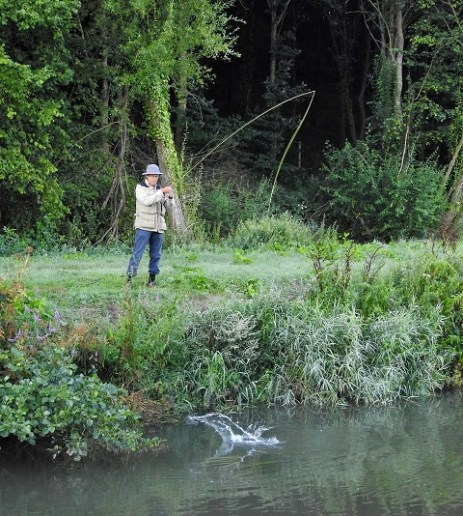
Barbless hooks are mandatory on the River Rother so that the wild trout and sea trout can be returned to survive and spawn. Barbless hooks or squashed barbs, ensure that trout are not damaged in the landing net or while being unhooked and that the fish can be quickly returned to the water. Barbless hooks, for nymphs and dry flies, are generally finer in the wire because a barb does not have to be cut into the metal. They are also sharper. As a result they tend to penetrate and hold a trout better than a barbed hook.

hooks

A barbless hook tends to drop out of the trout as soon as the fish is in the landing net. The hook does not become snagged in the mesh as the fish struggles and often the net can be lowered and the fish allowed to swim away without it being handled. That greatly increases its chances of survival. A pan-shaped, knotless landing net with a fine mesh gives the fish room to recover and swim away without any damage to it’s fins.

Use pliers or forceps to squash the barb down after tying the fly to the tippet. Barbless hooks and flies can be bought online, most specialist fly fishing suppliers stock a good selection.

Wildlife

IMG_5814small

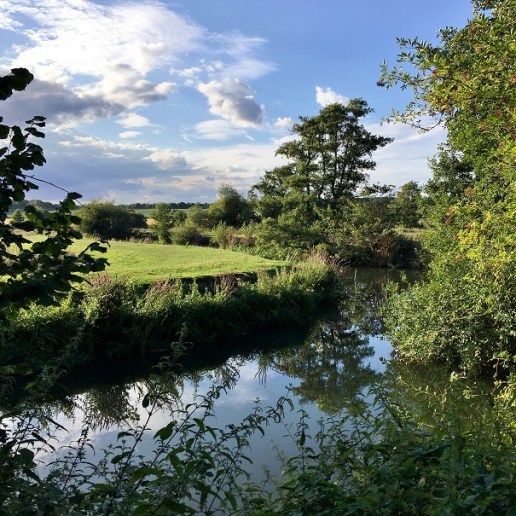
Fishing is not just about catching fish. It is also about the beauty of the countryside and the wildlife. A relaxing day sitting beside the water, watching the clouds and listening to the birds might be interrupted by a trout or two but that’s not essential.

Sitting quietly under a tree, an angler goes unnoticed by the animals and birds. The Bible and Isaak Walton in the Complete Angler, proclaimed ‘Study to be quiet’. Advice repeated by BB in the title of his book ‘Be Quiet and Go a Angling’. Deer, foxes and even a badger might approach while an angler waits quietly for dusk and the evening rise.

CNV00011small

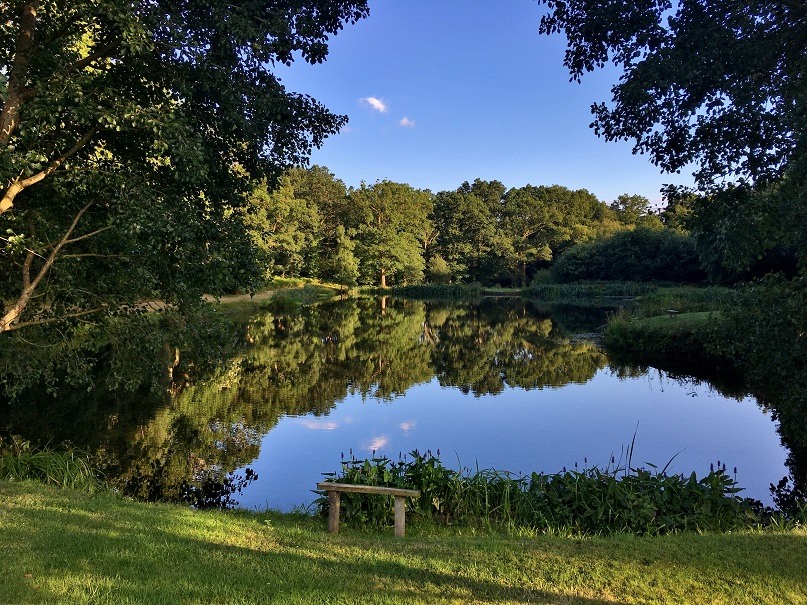
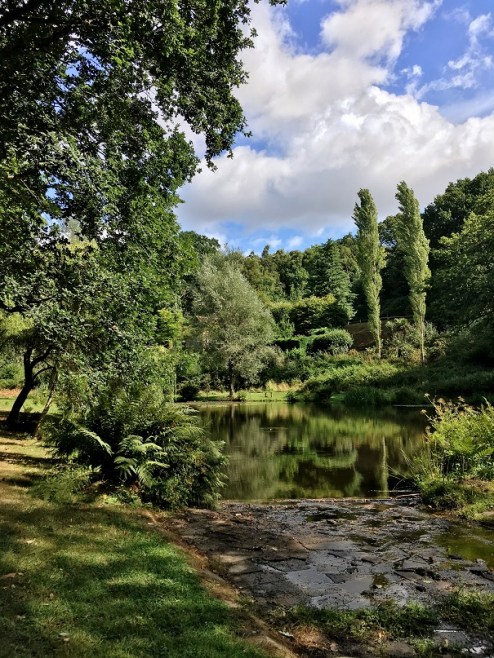
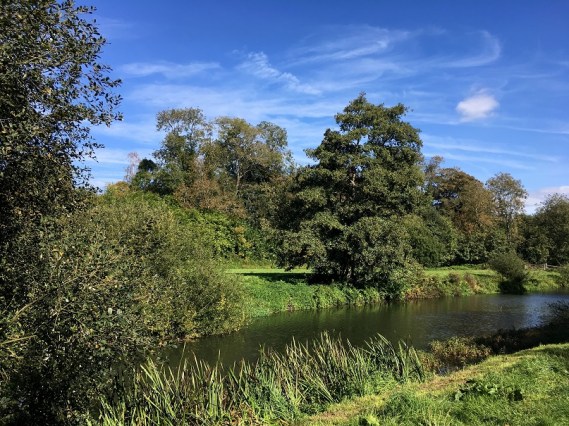
Club members are fortunate in having access to unspoilt countryside that is protected and managed for the benefit of the wildlife. The Rother valley is a Site of Nature Conservation Importance and the river flows mainly through the South Downs National Park which is an Area of Outstanding Natural Beauty. The club’s lakes are within parts of the Leconfield Estate to which the public has no access and the fauna is therefore undisturbed. The Estate is a haven of peace and tranquility.

IMG_4184small

Walking and frequent casting puts the trout down and also scares the wildlife. Waiting quietly and watching the water usually reveals a rising trout. If not, the buzzards circling just under the cloud base or the bright, blue blur of a kingfisher whizzing past are just as rewarding.

The water meadows in the river valley are grazed by mahogany red Sussex Cattle. They have been bred at Petworth since 1782 and were originally used for hauling carts and logs. They thrive on marshland and their grazing provides a habitat for ground nesting birds and wild flowers.

Owl boxes have been positioned around the Estate and they are all occupied. The water meadows are good hunting grounds and during the evening, owls are often seen by anglers on the river.

The hottest part of the day is a good time to sit in the shade of an alder or willow tree and have lunch. At that time the trout are usually hiding in the tree roots or under the streamer weed and are hard to tempt. Although the fishing is slow, there is much to see. Swallows skim the water looking for mayfly and olives. Chaffinches sit in the bushes and wait for their lunch to flutter past. Traditional farming practices have enabled terrestrial insects to flourish and there is a wide variety of butterflies amongst the long grasses.

IMG_3033small

The path from the clubhouse at Great Springs, past Little Springs and through the woods to Lower Figgs is like a nature trail. A buzzard sits in the tops of the trees beside Little Springs and pheasants scurry away into the bushes. A heron leaps into the air from the rushes where it has been feasting on frogs and toads. Yellow wagtails sit in the sun on the dam wall at Luffs and a kestrel hovers over the nearby moorland.

IMG_2698small

In the spring the woods along the sides of the river valley and around the lakes, are carpeted with bluebells, violets and wild garlic. The pungent smell of the wild garlic eventually overpowers the fragrant bluebells. In the water meadows there is a wide variety of wild flowers, particularly orchids.

IMG_0352small

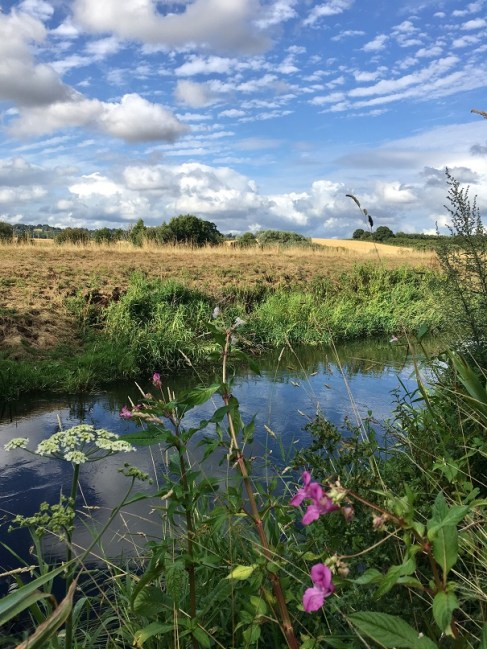
In July the days are long and hot and the trout become lethargic. They stay in the deepest part of the lakes and shelter under the bushes that have been allowed to remain by the river. Early morning and late evening are the most productive fishing times but there is plenty to see at midday. A honeybee collecting nectar from the Himalayan Balsam. A fox startled from it’s siesta at Ladymead. Perhaps a sighting of a hobby as it catches dragon flies in the sunshine.

DSCF0362a

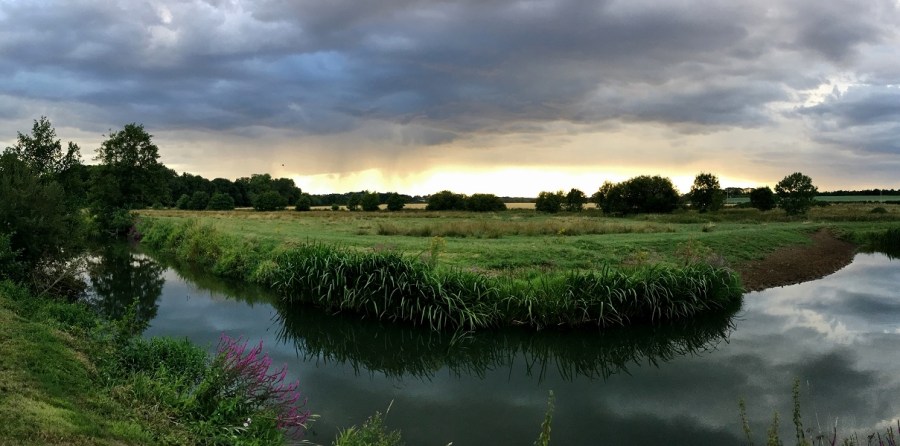
The South Downs cause the prevailing south westerly winds to rise and clouds to form over the Rother valley. Anglers may have waited several hours for the evening rise but if the trout are fussy and things don’t go to plan, there’s always the consolation of a spectacular cloudburst sunset.

The wonder of the world
The beauty and the power
The shapes of things,
Their colours, light and shades
These I saw,
Look ye also while life lasts

. . .  Denys Watkins-Pitchford ‘BB’